INTRODUCING eARC
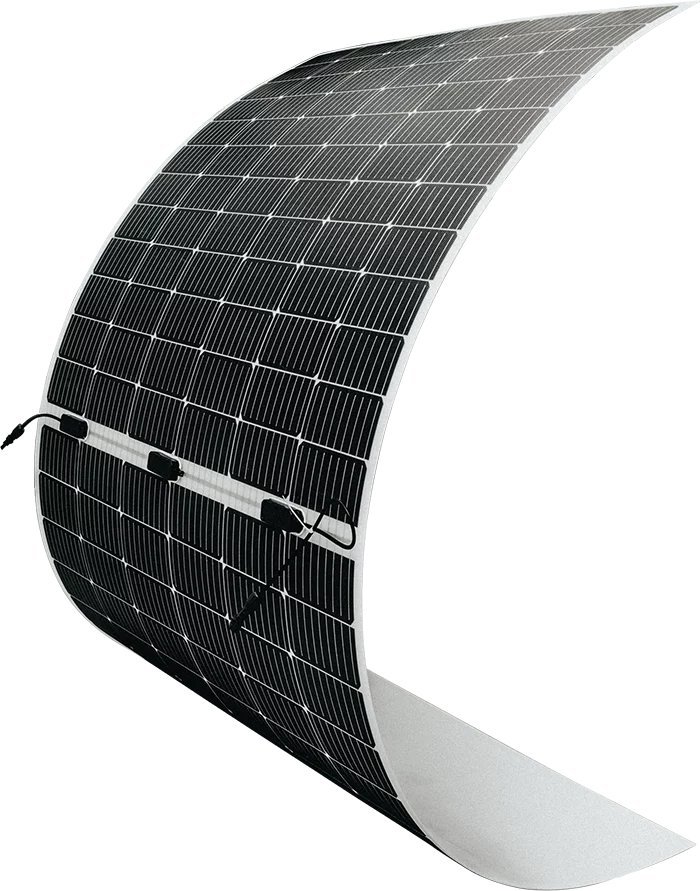
the world's first & only glassless, flexible & light solar skin
250
MEGAWATTS
& growing!
Installed Worldwide
6
MEGAWATTS
& growing!
Installed in Australia
All roof types & surfaces
Glues straight onto your roof, no roof penetration required. Light and flexible: curved and thin roofs.
What is eARC?
eARC is a revolutionary solar technology invented by Sunman - the world’s largest manufacturer of lightweight solar panels. eARC allows buildings with structural constraints and limitations to install solar. It also has applications with vehicles and marine including caravans and boats.
Durable. Built to last.
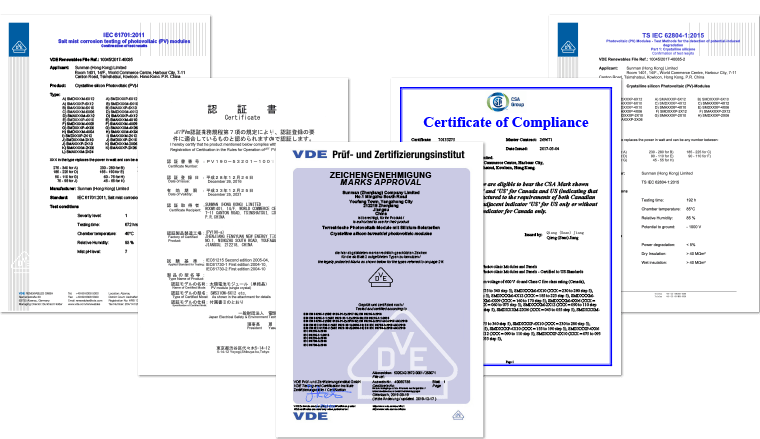
It's durable, reliable and long term. Unlike cheaper entry level competitors, eARC has actually passed all the same durability tests as glass panels, and further tests beyond that. It performs the same as glass panels, without the glass. It's passed hail, fire, ammonia corrosion, salt mist, damp heat, UV exposure and more tests. eARC can withstand prolonged exposure to Australia's open air environment.
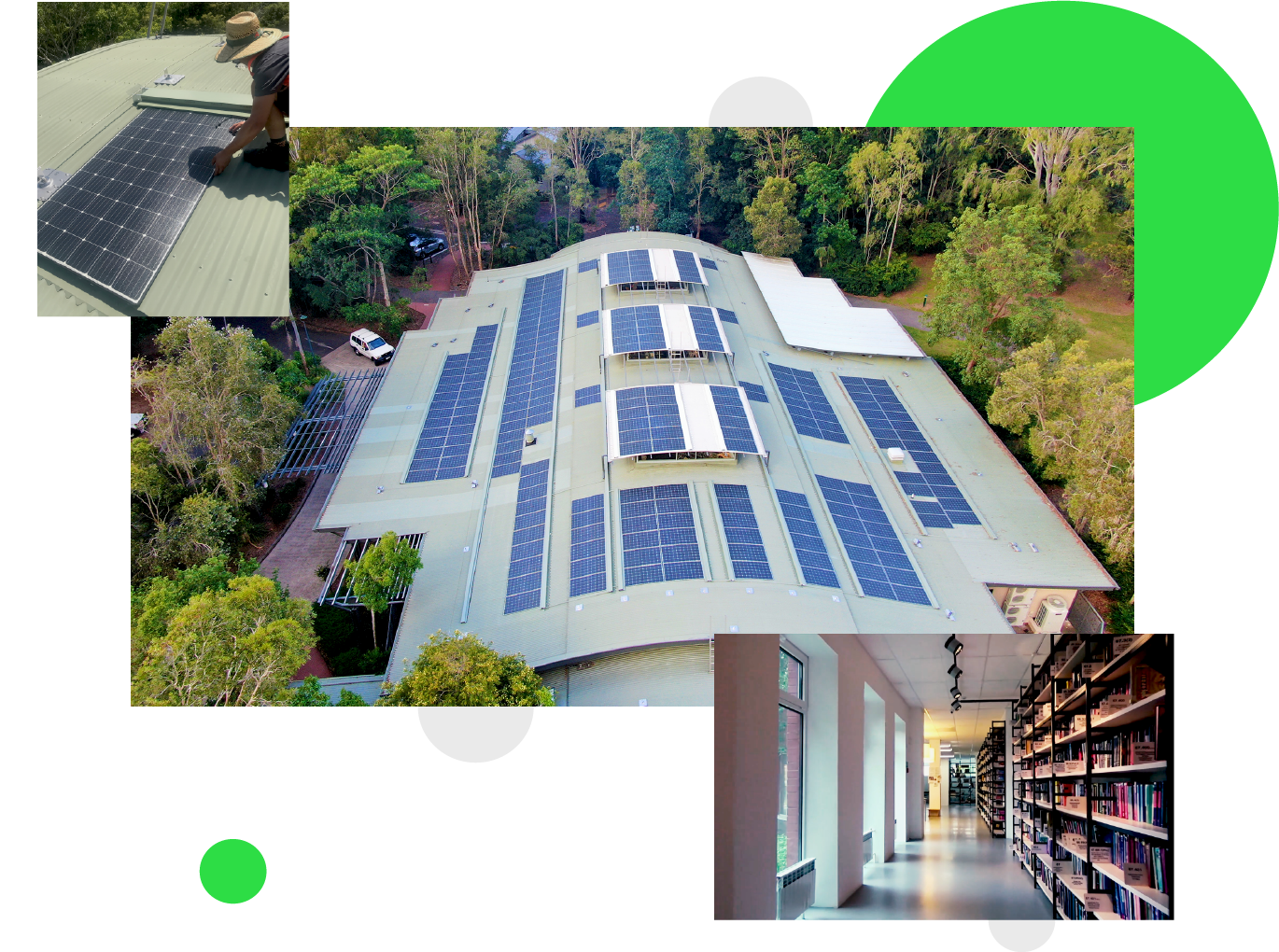
Noosaville Library and eARC
Noosaville Library had sustainability targets which included a solar system on their heritage building's roof. However, they struggled to find a solution with glass panels unable to cater to the curved surface and requiring penetration for installation. eARC solar skin provided a solution to Noosaville Library, where they enjoyed a non penetration install, with the skins glued straight onto the roof, fitting the curved surfaces. They now enjoy a more aesthetically pleasing solar system whilst maintaining high functionality and performance.
eARC Solar for Vehicles and Boats
eARC is one of Australia's most popular off grid solar skins for vehicles and boats. Chat to us today about transforming your vehicle or boat into a solar powerhouse.
The panel.
Cutting edge.
Check out these eARC installations we've done for Australian Business
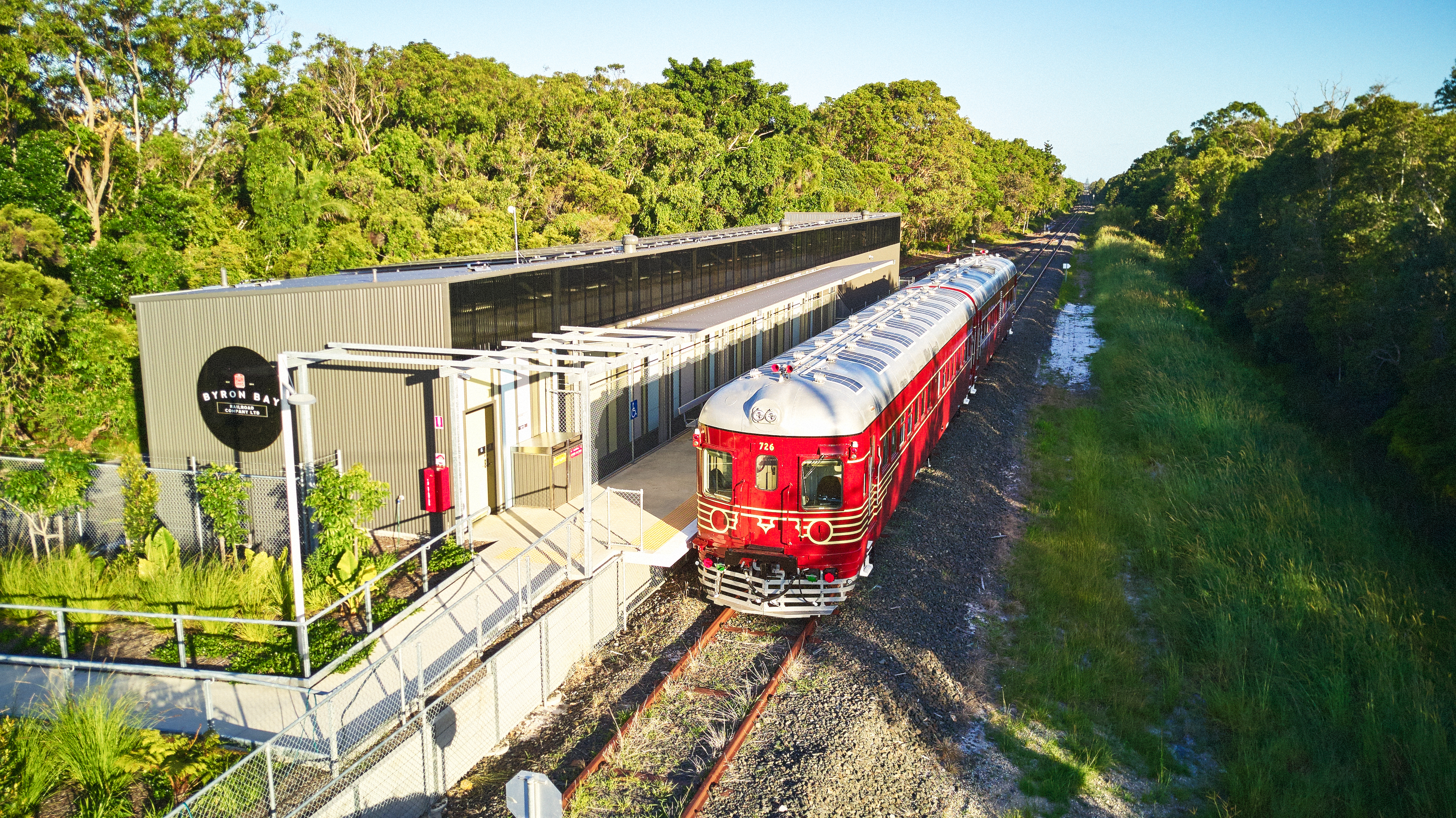
byron bay solar train
Saving: $3000 per year
CO2 Reduced: 11 tonnes per year
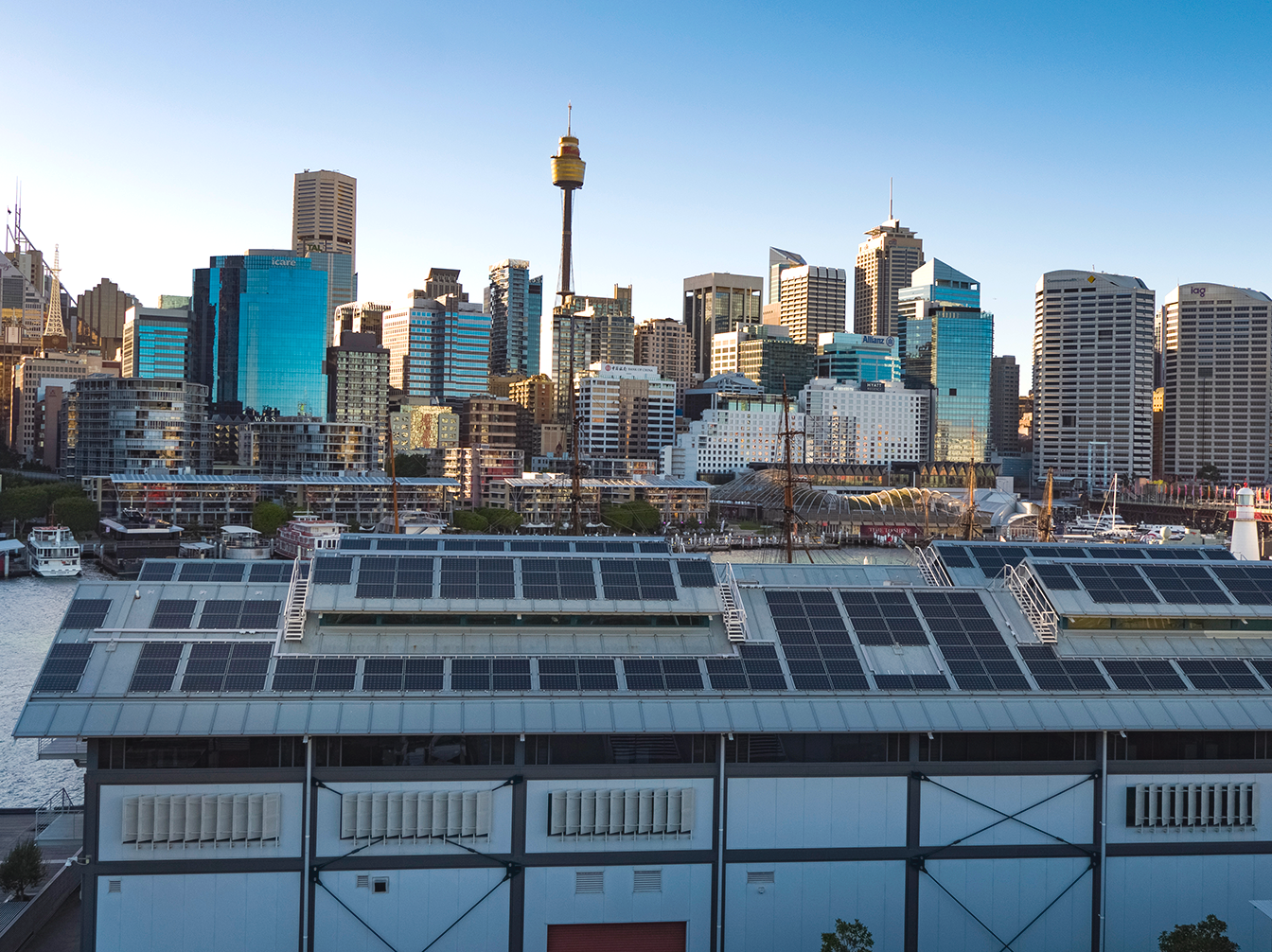
australian national maritime museum
Saving: $55,000 per year
CO2 Reduced: 329 tonnes per year
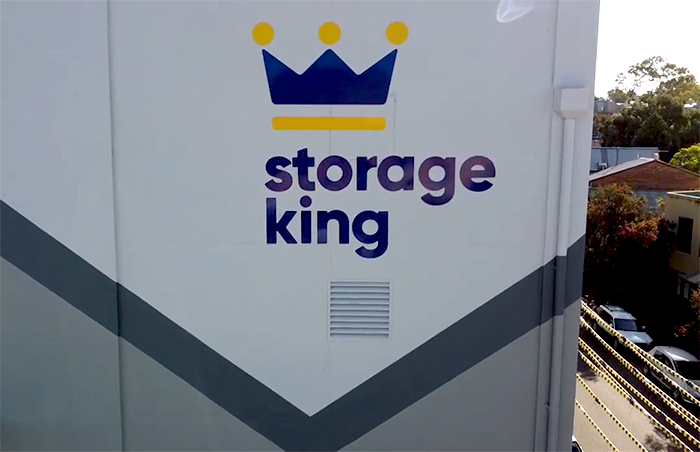
STORAGE KING ROZELLE
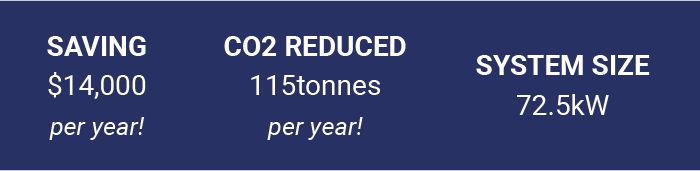
Savings: $8,500 per year CO2 Reduced: 75 tonnes per year
51kW of eARC installed.
The materials.
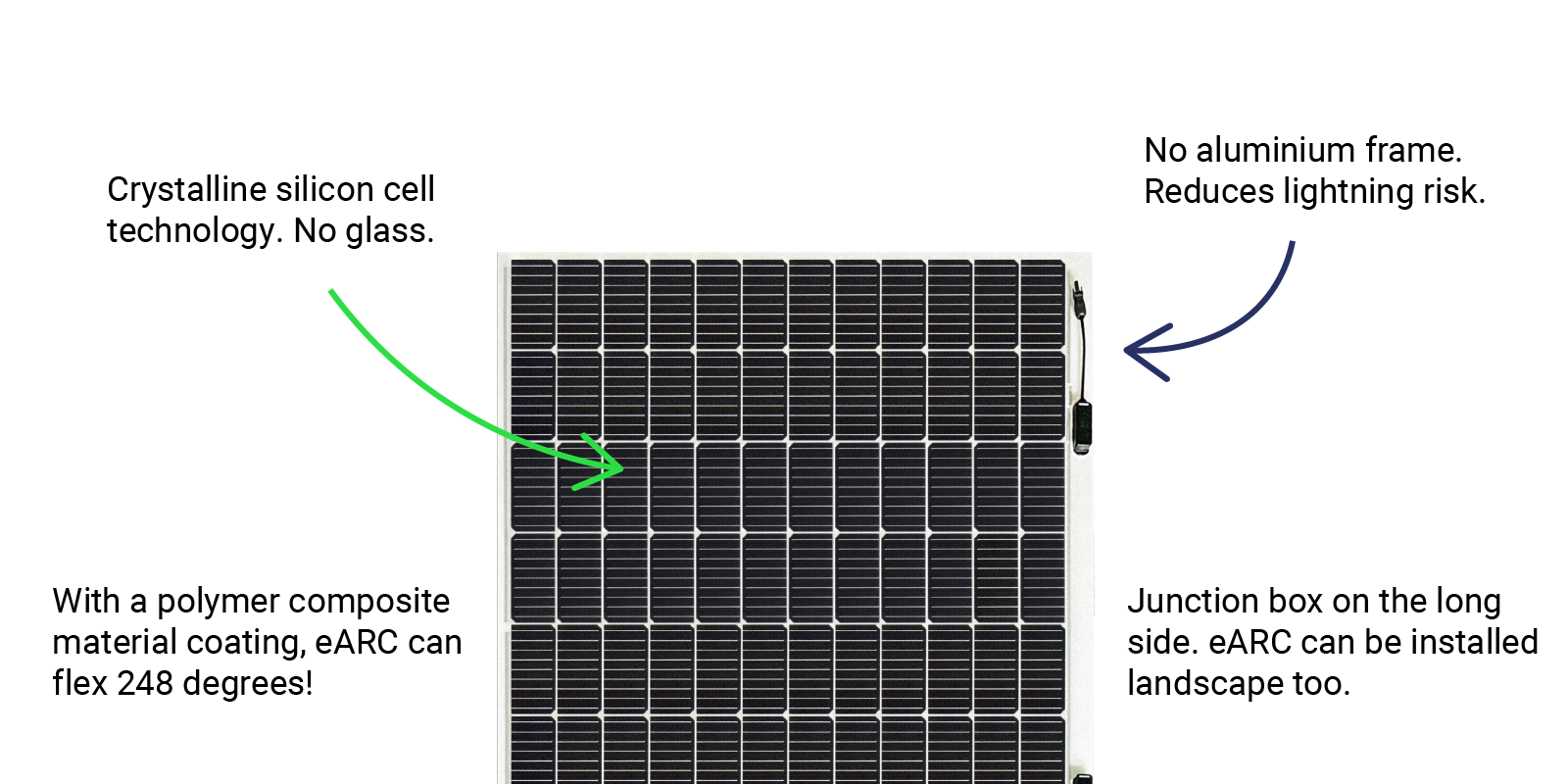
Conventional glass panels have a lot of material covering solar cells that is actually unnecessary; it adds weight, increases lightning risk and requires mounting support. eARC has shedded all the unnecessary material. Using a patented composite polymer material to cover the crystalline silicon solar cells, instead of glass, the same durability is achieved with the added benefits of being lightweight, flexible and thin. It also doesn't need aluminium framing, in fact there is no metal at all, so there is less lightning risk.
Stick them wherever! Any roof.
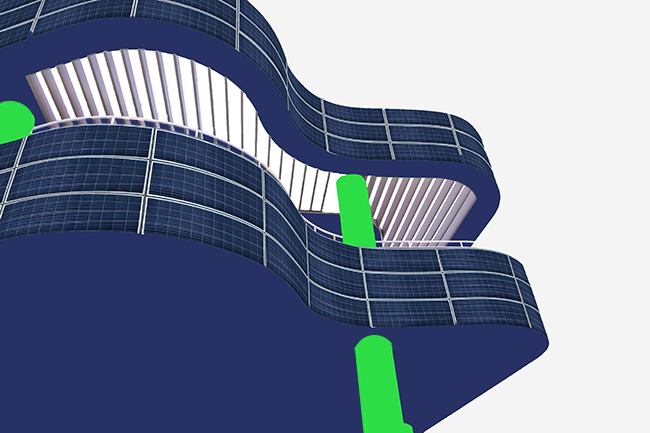
Curved roofs, glass surfaces, building facades and sides, metal corrugated roofs, insulated roofs, thin, light, tiled... there isn't a roof that eARC cannot be installed on.
Curved roofs
Waterproof Membranes
Building facades and sides
Any roof type or surface
Industrial roofs
How it differs from conventional glass panels
- No glass: a composite polymer replaces the cover layer entirely
- No aluminium frame
- A fraction of the weight of standard panels
- Conforms to curved and irregular roof surfaces
- No roof penetration required at any point
Who needs lightweight solar panels?
eARC is the right choice when a standard solar installation isn’t structurally or practically possible:
Older commercial buildings (pre-2000 construction)
Buildings designed before solar was common often have roof load limits that a glass panel array will exceed. eARC adds solar capability without requiring structural upgrades or engineering assessments.
Heritage-listed buildings
Where roof penetration or structural modification is restricted under heritage conditions, eARC’s adhesive bonding method means solar installation can proceed without breaching those requirements.
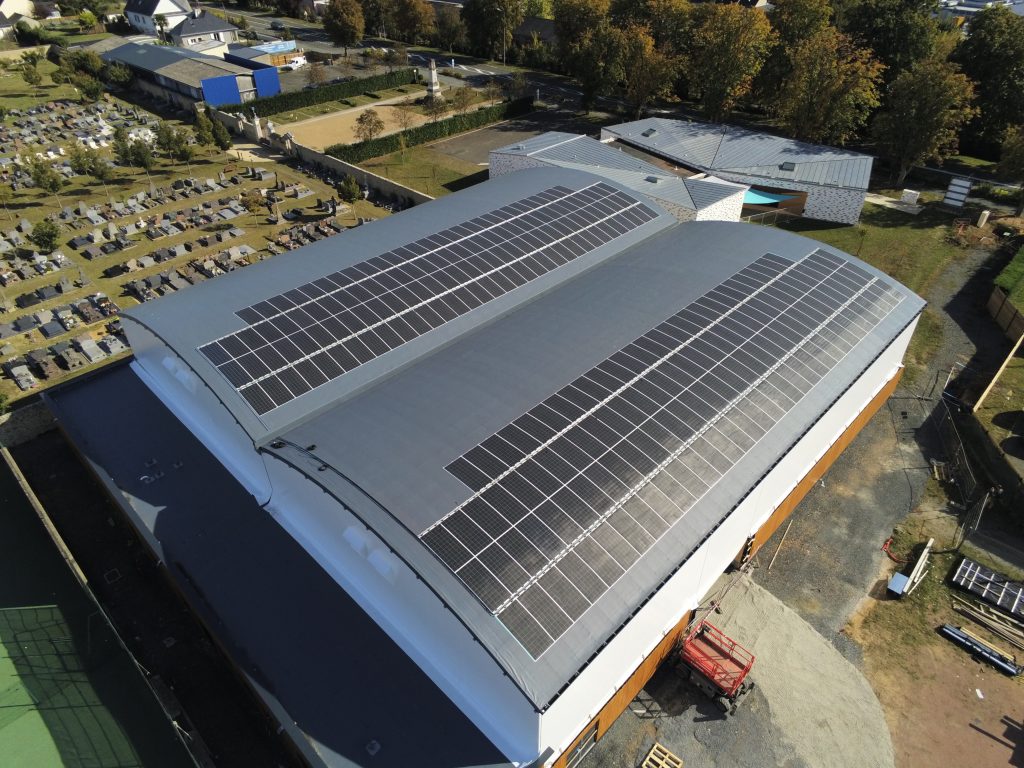
Curved and irregular roofs
eARC is flexible. It conforms to curved surfaces, barrel vaults and non-flat profiles where glass panels physically cannot be mounted.
Membrane and waterproof roofs
Drilling through a waterproof membrane voids its warranty. eARC bonds directly to the membrane surface without penetration, preserving the existing waterproofing system.
Insulated metal deck roofs
Common in cold storage, logistics and food processing facilities. eARC avoids the thermal bridging and penetration issues that compromise insulated roof systems when standard solar is installed.
Building facades and vertical surfaces
eARC can be mounted on facades, vertical walls and non-horizontal surfaces where conventional panels would require complex and expensive racking structures.
The waterproof and glareless solar solution!
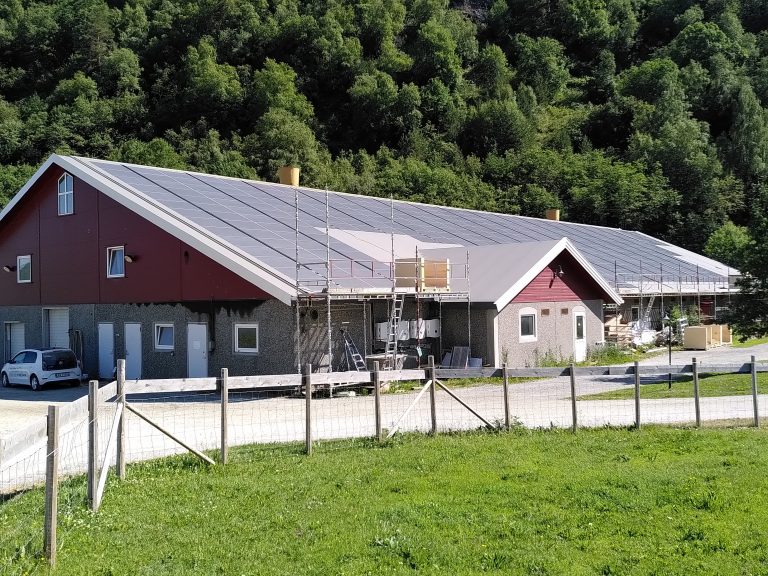
Yep, that's right! eARC can be "quickbonded" using the same glue that holds your windscreen to your car! This means zero pentration, so your roof remains waterproof - like this eARC installation in Norway. Plus! Without glass... eARC is glareless - minimal sun reflection (your neighbours will love you).
Worldwide eARC Installations
eARC has been installed in over 30 countries worldwide. Take a look!
UAE
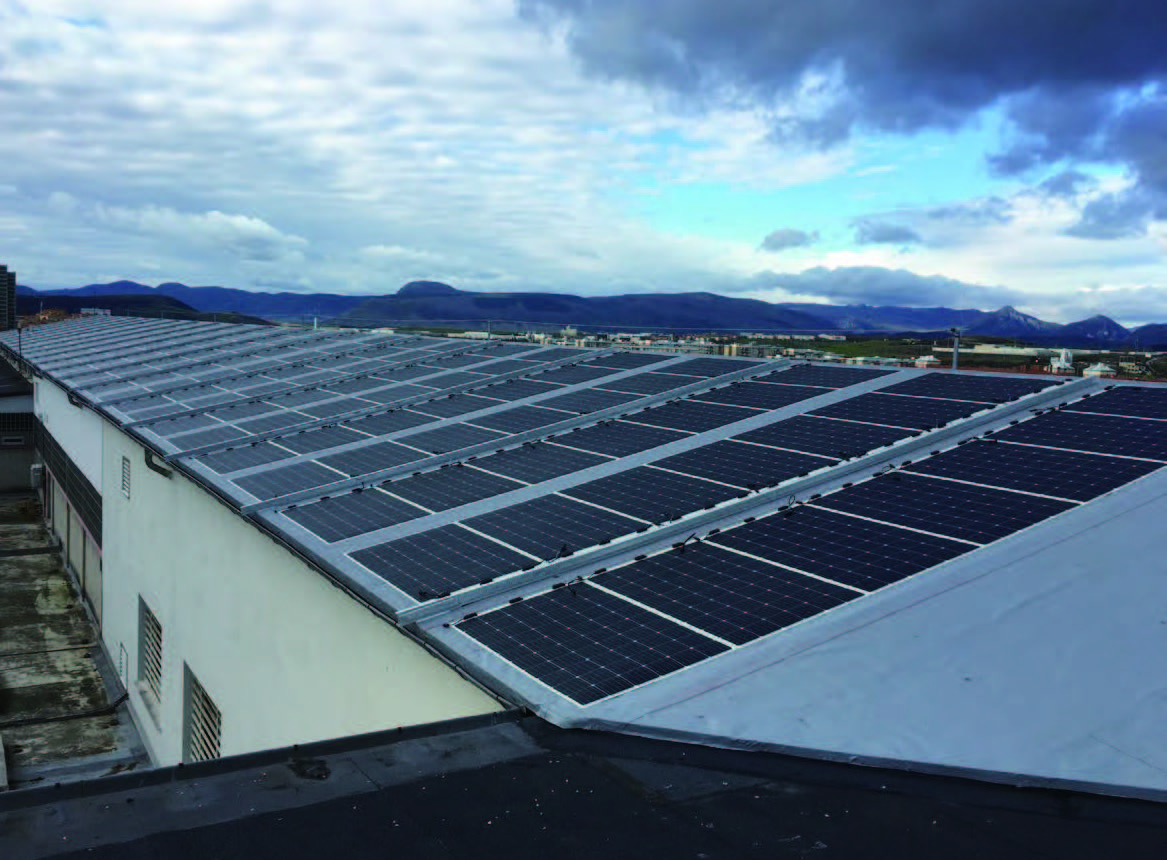
SPAIN
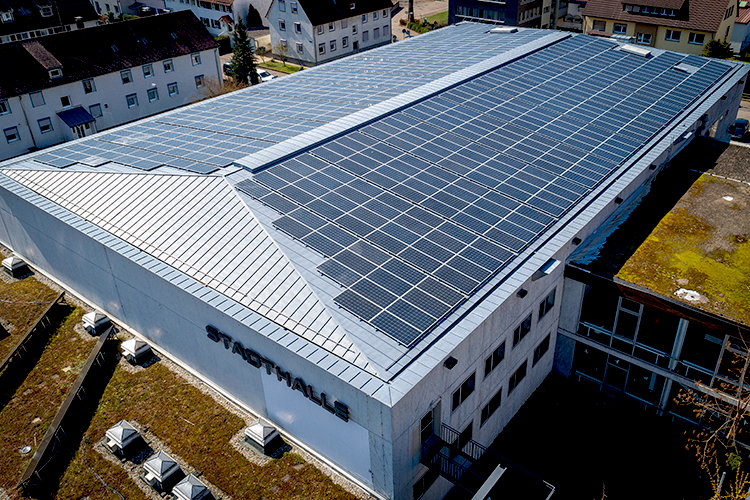
GERMANY
NORWAY
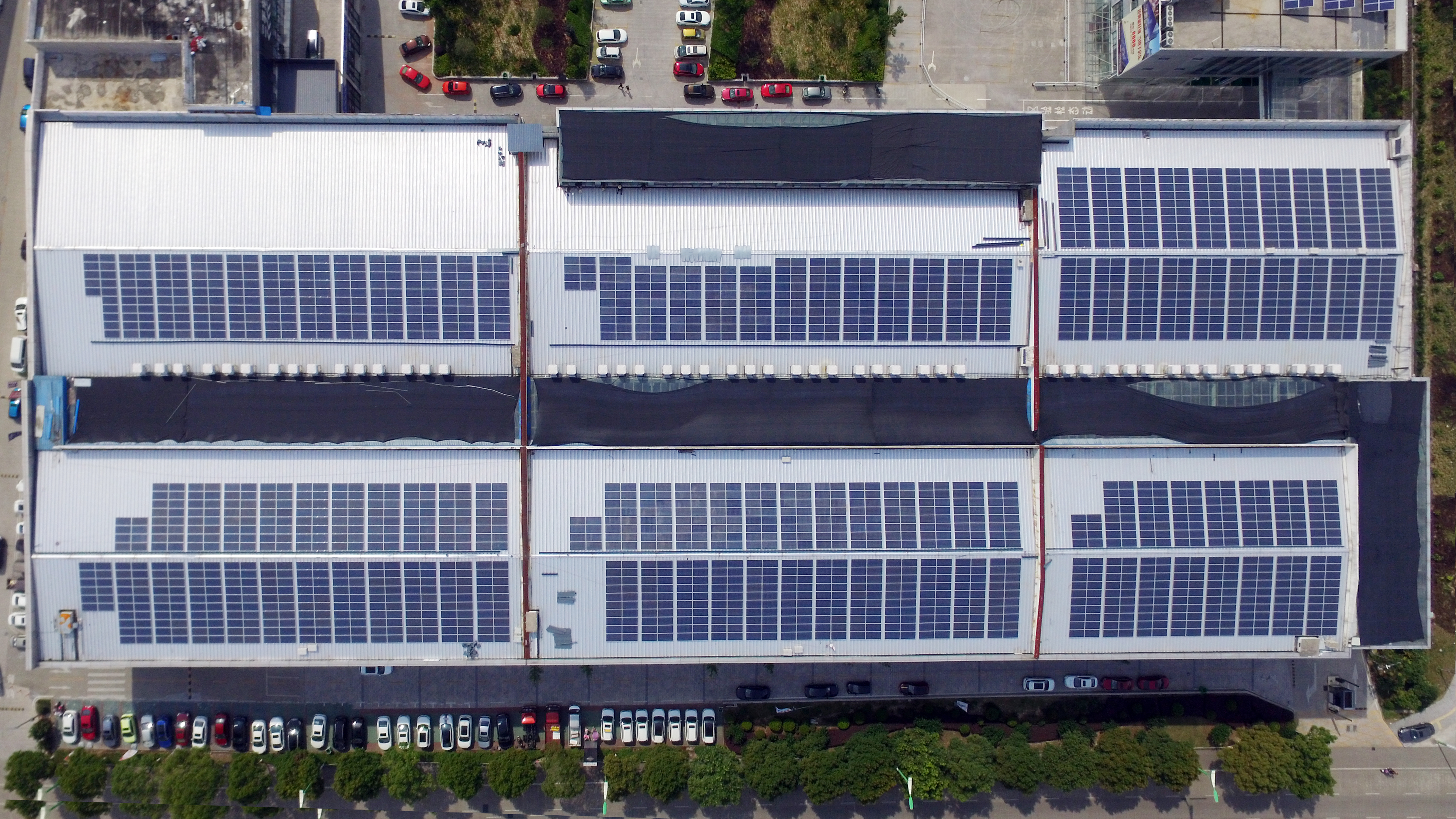
CHINA
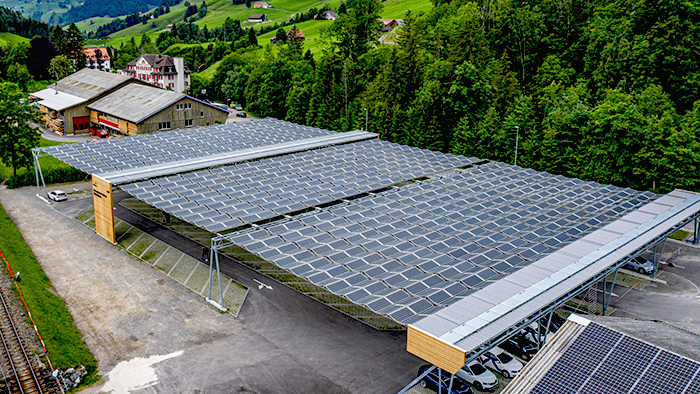
SWITZERLAND
FRANCE
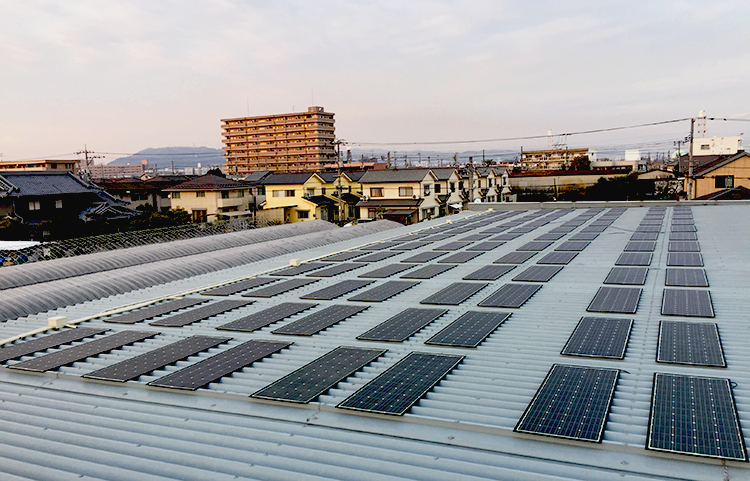
JAPAN
eArc is the first module of its kind to pass the same durability and safety tests as glass modules, including IEC 61215:2016, IEC61730:2016 and UL1703 (USA). eArc has also passed additional module quality assessments, including 3000 hours of damp heat, UV exposure (25 years equivalent), PID, salt mist and ammonia corrosion tests. eArc is CEC (Clean Energy Council) approved in Australia.

Yes. Quick bonding allows eArc to be attached strongly to your roof. The close gaps between the module and the roof makes it difficult for the panel to be torn off by uplift forces. Quick-bonding allows the eArc module to be bonded to the roof with strips of butyl tape or silicone glue, reducing the risk of concentrated point-load pull forces associated with fixing panels with screws. The bonding strength provided by gluing is often underestimated. It is the same glue that holds your car windscreen glass to your car. Take a frequently used quick-bonding configuration as an example: in a laboratory, a bonding surface of 6 square centimetre’s can withstand a tensile force of over 2000N. In real life, the bonding surface of each eArc module is greater than 60 square centimetre’s. By contrast, traditional screw mounting is tested at a pull force at only 1000N.
| 430W eARC Solar Panel | Conventional solar panel | eArc |
| Frame (Material) | Aluminium | Frameless |
| Top (Material) | Glass | Patented Polymer Composite Material |
| Weight of solar panel | 25kG | 7.3kG |
| Thickness of solar panel | 40mm | 2mm |
The cost of eArc solar panel’s is competitive with conventional glass panels. eARC can also be coupled with glass panels for a hybrid approach to your solar system.
We get it. eARC is a new innovative solar product so its hard to know if its trustworthy. However, it has passed all the same durability tests as glass panels and further tests beyond that still. It’s CEC approved and certified, and backed by the Australian government through the Clean Energy Finance Corporation.
We are starting to see new similar innovations enter the market. eARC has just established a gigawatt size factory to cater to enormous global demand. It has a 25 year performance warranty and was innovated by Dr Shi, an adjunct professor at the UNSW with over 100 papers published, over 60 patents in photovoltaics and is the 4th richest Australian. eARC is involved in vehicle integrated photovoltaics and building integrated material photovoltaics.
Absolutely! We’ve done exactly that for many installations. If you’re looking for the most cost effective solution for your business and need to also incorporate eARC, our solar consultants can run an analysis based on all our tier 1 solar glass manufacturers to arrive at the most cost effective hybrid solar system solution.
The reason eARC can be quickbonded without any mounting support allowing for airflow underneath is because eARC doesn’t have any glass. Conventional glass panels need 200mm clearance because they have glass, and glass is an insulator. In fact, with eARC, heat goes out from the front of the panel. eARC is cooler than conventional glass panels.